
Control the quality of your fuels:
WE HAVE THE SOLUTION,
GROTAMAR
Additives play a strategic role in fuels for large ships, optimizing both energy efficiency and the reliability of propulsion systems. They improve fuel stability, limit deposit formation in injectors and combustion chambers, and reduce corrosion within fuel systems…
Tested and certified by UTAC
Integral additive
These tests have proven a real decrease in fuel consumption and pollutant emissions (our additive helps to effectively reduce five of the most harmful gases for the environment and health, and lower consumption by 5%, our report is available on request).
5%
Reduces consumption
4.73%
Reduction in CO² emissions
24 mois
Stops fuel oxidation and stabilizes it
-7°C
Improves cold resistance and loosens diesel fuel
About Us
Specialists in fuel additives for heavy maritime transport, we support shipowners and fleet managers in optimizing and securing their operations. Our expertise covers current marine fuels (VLSFO, HSFO, MGO) and the associated challenges: stability, compatibility, combustion, fouling, and system protection.
Our approach is based on technical analysis, adapting formulations to real-world operating conditions, and monitoring performance over time. Our mission is clear: to improve energy efficiency, reduce operating costs, and minimize operational risks throughout the entire navigation cycle.
Fuel additives that make a difference!
Certifications & Testing

Eligible for Energy Savings Certificates (CEE)
Our additive is eligible for EEC premiums for goods and passenger carriers with the TRA-EQ-119 form.

COā target
This independent certification recognizes concrete actions taken to protect the environment. Our additive contributes effectively and sustainably to reducing polluting emissions.
Easily biodegradable
Our fuel additives are 60% or more biodegradable, reaching this rate by the 6th day of testing. By the 28th day, 80% of the product has biodegraded.
Tested and certified by UTAC
Tested and certified by UTAC, a world leader in certifications, the only French technical body accredited to carry out emissions tests and issue official certifications in accordance with European environmental standards.
301f/ ec c.4
Recognized as "readily biodegradable" according to OECD (Organisation for Economic Co-operation and Development) standards
TRA-EQ-119
Eligible for EEC bonuses for freight and passenger carriers with the TRA-EQ-119 form
N°Biocide : 75954
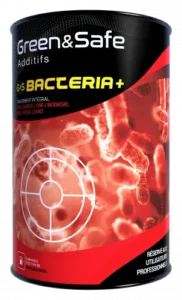
Biocidal Fungicide Additive for Marine Fuel
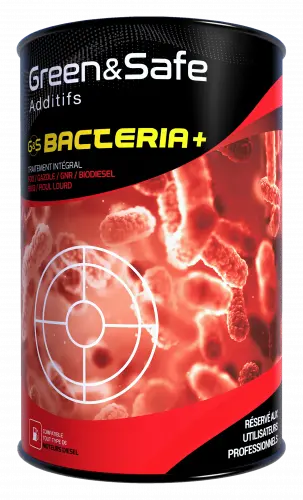
Derived from a Vink Chemicals formulation known as Grotamar 71, widely used by major oil companies and European militaries, and also approved by manufacturers such as MAN, Daimler, MTU, and Deutz. (Green&Safe Product repackages these formulations without any modifications). The G&S Bacteria + additive is suitable for treating equipment tanks, and even more so for large storage tanks, reservoirs, oil terminals, and service stations.
Anti-corrosive properties and remains compliant with BPR and FIFRA standards
FOR PROFESSIONAL USE ONLY
- Eliminates bacteria, fungi, mold and yeast
- Treatment of storage tanks and reservoirs
- Effective against aqueous deposits at the bottom of the tank within 10 to 12 hours
Additives in action.
Case studies:
Transport
Dragging
Fishing
Tugboats
ADDITIVES
PRODUCTS:
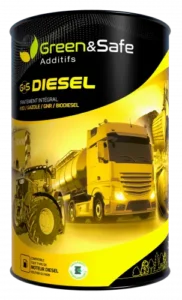
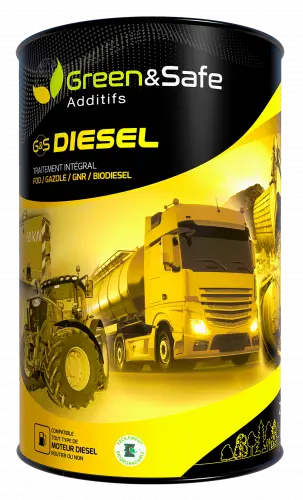
G&S DIESEL
Integral diesel additive FOD GNR Biodiesel Combustion catalyst
Combustion catalyst, a multifunctional and readily biodegradable diesel/heating oil/non-road diesel additive according to OECD 301F standard. Made from a hydrocarbon-free formulation.
GROTAMAR 72
Biocidal Fungicide Additive for Marine Fuel Diesel Fuel Oil GNR Heavy Fuel Oil B100
Bactericide and fungicide for marine and land fuel, very powerful against bacteria, fungi and mold in diesel fuels
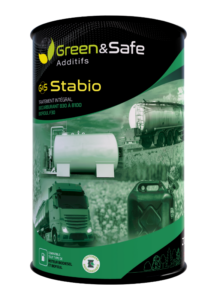
S&S STABIO
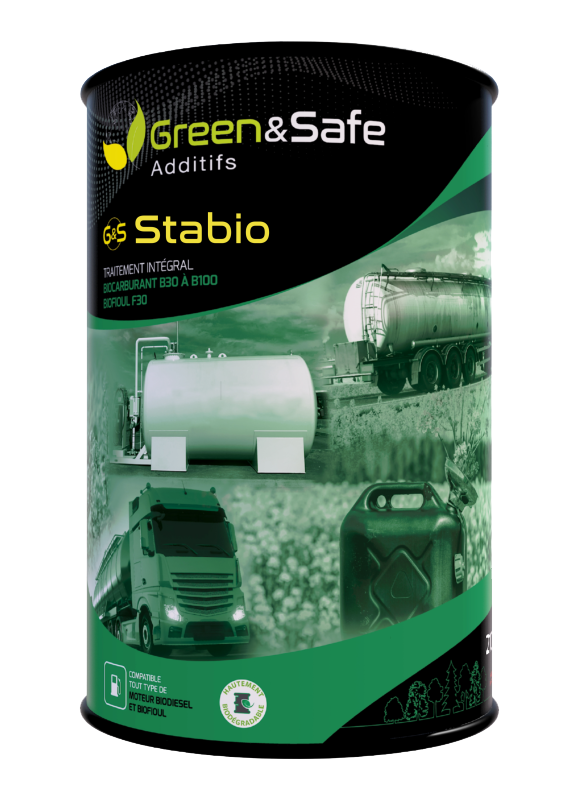
Integral additive for biofuels, biodiesel & biofuel oil F30
Antioxidant additive combustion catalyst for Biofuel, Biodiesel & Bio-fuel: B100, B30 and F30.
GROTAMAR 82
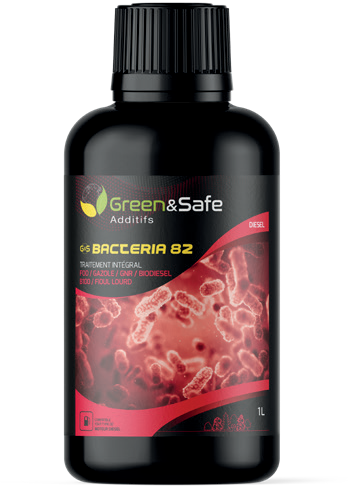
Biocidal additive for marine and terrestrial fuels, reserved for professional use.
The G&S BACTERIA 82 additive is a biocide for marine and land-based fuels for the treatment of contaminated diesel fuel.
Contact form:
Ready to work together? Let’s create a project together!
Learn more.
Frequently Asked Questions:
Marine fuels can present challenges related to stability, compatibility, sludge formation, injector fouling, and corrosion.
Additives help to:
- Improve fuel stability and compatibility
- Reduce sludge and deposit formation
- Optimize combustion and energy efficiency
- Protect injection and storage systems
Contribute to regulatory compliance (IMO 2020, emissions reduction)
They thus ensure safer operations and reduce the risk of engine failure.
The ROI is generally observed along several lines:
- Reduced specific fuel consumption (improved combustion)
- Reduced maintenance interventions
- Less clogging of filters and separators
- Reduced unplanned downtime
In the maritime context, where fuel represents the main operating expense (OPEX), even a marginal performance improvement can generate a significant financial impact across an entire fleet.
Large cargo ships (VLCCs, Capesizes, ULCSs, long-distance bulk carriers) operate on long voyages using fuels bunkered in different ports, sometimes resulting in variations in quality and compatibility.
Additives help to:
- Stabilize fuels from multi-origin bunkerings
- Reduce the risk of incompatibility between batches
- Limit sludge formation during prolonged storage
- Maintain the cleanliness of fuel systems on long voyages
- Ensure consistent engine performance under continuous load conditions
For shipowners and operators of international fleets, this translates into reduced operational risk, improved performance predictability, and optimized costs throughout the entire operating cycle.